
Tiede
Research and Relationship Compatibility
DNA Romance compares selected DNA information through the DRom 1.0 algorithm. It assesses 100 The model compares selected genetic markers between profiles. These comparisons are one input and do not determine relationship outcomes.
DRom 1.0 and DNA Comparisons
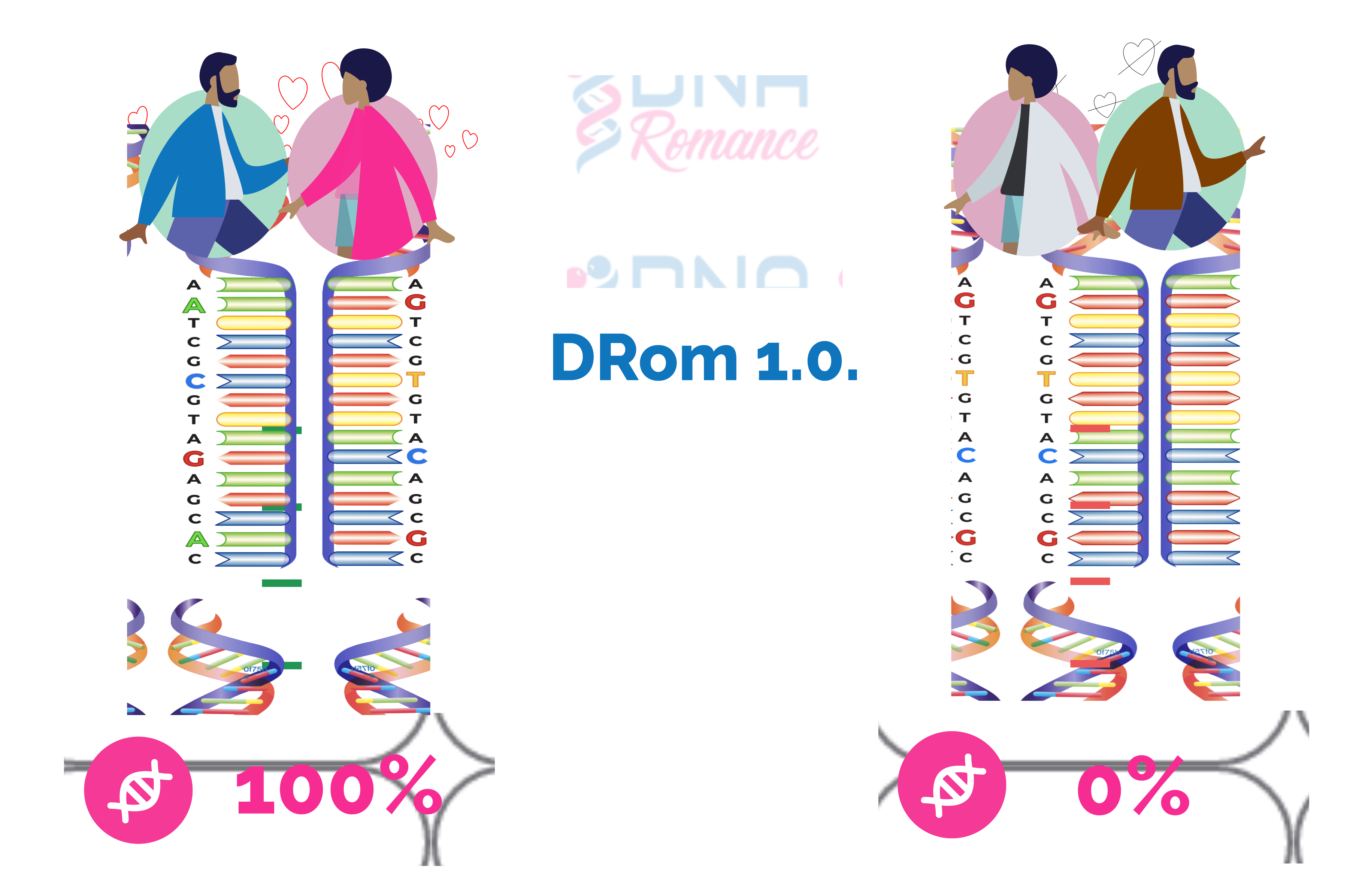
DNA Romance ennustaa myös. persoonallisuus yhteensopivuus and helps people compare shared common interests via filters, and fyysinen vetovoima based on photographs.
Persoonallisuusyhteensopivuuden arviointi.
Kuinka erilaiset persoonallisuustyypit vuorovaikuttavat suhteissa.
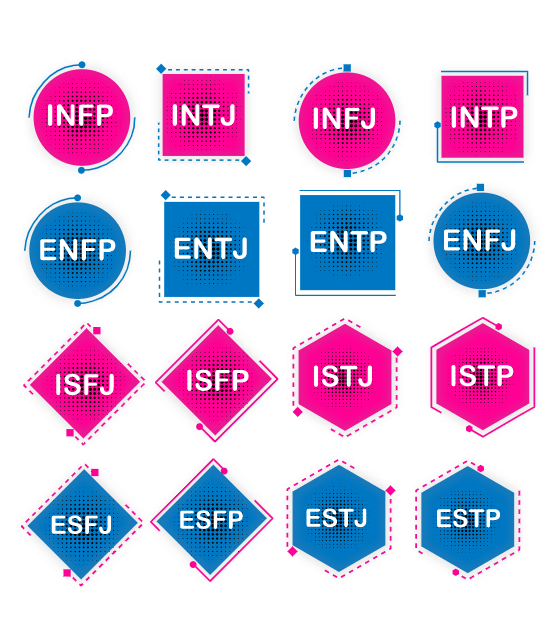
Personality preferences are organized into 16 persoonallisuustyypit types that describe different ways people communicate and make decisions., widely used today in organisational psychology.
DNA Romance uses these profiles to help members compare personality preferences.
Avain Tutkimusartikkelit
Selected peer-reviewed studies underpinning the science behind DNA Romance.

MHC-Based Attraction (Chemistry) and Relationship Choice
DNA Romance developed DRom 1.0 after reviewing research on DNA variation, scent, and partner choice. The studies below show mixed and context-dependent findings.
Dandine-Roulland ja muut, 2019
+
Dandine-Roulland C, Laurent R, Dall'Ara I, Toupance B ja Chaix R (2019)
Genominen näyttö MHC:n epäyhteneväisestä parittelusta ihmisillä.
Proceedings of the Royal Society B
This study examined whether genetic differences were associated with partner choice across several populations. The findings varied by region, leaving social and cultural context as important factors.
Birnbaum et al., 2019
+
Birnbaum GE, Zholtack K, Mizrahi M & Ein-Dor T (2019)
Evolutionary Psychological Science 5, 276–285
Some studies have examined whether hormonal contraception is associated with changes in partner preference. Results remain mixed, and the research does not establish compatibility between two people.
Wedekind, 2019
+
Wedekind C (2019)
Research on scent pleasantness, intensity, and genetic differences
Proc. R. Soc. B 285:20172714
This reanalysis explored how scent pleasantness and intensity related to genetic differences in the study sample. It described a more nuanced pattern than a direct link between genes and attraction.
Henningsson et al., 2017
+
Henningsson S et al. (2017)
Research on genetic differences and partner choice
Translational Psychiatry 7:e1118
This review considered whether genetic variation was associated with partner choice across modern populations. It found no single pattern that can determine attraction or relationship outcomes.
Christakis & Fowler, 2014
+
Christakis NA, Fowler JH (2014)
PNAS 111(suppl 3): 10796–10801
Friends share genetic similarity comparable to that of fourth cousins. Suggests social bonds form along subtle biological gradients, not only shared environment - relevant to how romantic compatibility extends beyond MHC.
Garver-Apgar et al., 2006
+
Garver-Apgar CE, Gangestad SW, Thornhill R, Miller RD, Olp JJ (2006)
Psychological Science 17:830-835
One study reported associations between genetic similarity and survey responses about sexual interest and fidelity. An association in one sample does not predict how a relationship will develop.
Roberts et al., 2008
+
Roberts SC, Gosling LM, Carter V, Petrie M (2008)
MHC:hen liittyvät hajumieltymykset ihmisillä ja suun kautta otettavien ehkäisyvalmisteiden käyttö
Proc. R. Soc. B 275:2715-2722
This study explored whether oral contraceptive use was associated with scent preference. The reported effect remains debated and should not be treated as a measure of compatibility.
Wedekind & Furi, 1997
+
Wedekind C, Furi S (1997)
Research on scent preferences and genetic diversity
Proc. R. Soc. B 264:1471-1479
Participants rated scent samples from genetically typed donors. The findings suggested that overall genetic diversity may matter more than any specific pair of markers, but the study did not predict relationship success.
Wu et al., 2018
+
Wu K, Chen C, Moyzis RK, Nuno M, Yu Z and Greenberger E (2018)
Evolution and Human Behavior. 39(4):447-456.
In one speed-dating study, some genetic differences were associated with second-date decisions for women but not men. Personality and other profile information also mattered, so the findings do not provide a stand-alone matching rule.
Burger ym., 2017.
+
Burger D, Meuwly C, Marti E, Sieme H, Oberthür M, Janda J, Meinecke-Tillmann S and Wedekind C (2017)
Research on scent and mate preferences in horses
Theriogenology. 89:318-323.
This animal study examined genetic differences, hormone levels, and mating interest in horses. The patterns changed with reproductive phase and cannot be assumed to describe human partner choice.
Sherlock et al., 2016
+
Sherlock JM, Sidari MJ, Harris EA, Barlow FK, Zietsch BP (2016)
Testing the mate-choice hypothesis of the female orgasm: disentangling traits and behaviours .
Socioaffect Neurosci Psychol. 6:31562.
This study explored whether partner traits were associated with reported orgasm frequency. It found associations with several social and sensory traits but did not establish a single cause.
Kromer et al., 2016
+
Kromer J, Hummel T, Pietrowski D, Giani AS, Sauter J, Ehninger G, Schmidt AH, Croy I (2016)
Research on genetic differences, partnership, and sexual satisfaction
Sci Rep. 6:32550.
The study examined whether immune-gene differences were associated with partner choice and sexual satisfaction. It reported possible scent-related associations, not a deterministic relationship.
Wlodarski and Dunbar., 2015
+
Wlodarski R. and Dunbar RIM. (2015)
Research on romantic kissing and mate desirability
Evol Psychol. ; 12(1): 178–199.
This study examined how reported kissing ability affected ratings of potential partners. Visual information and relationship context also influenced responses, which points to several factors rather than one measure of desirability.
Burger ym., 2015.
+
Burger D, Dolivo G, Marti E, Sieme H and Wedekind C (2015)
Research on genetic type and reproductive signals in horses
Proc. R. Soc. B 282:20150407
This animal study examined whether genetic differences were associated with hormone levels and sperm count in stallions. Its findings concern horses and do not establish a human matchmaking outcome.
Laurent and Chaix., 2012
+
Laurent R and Chaix R (2012)
BioEssays. 34(4):267-71.
.
Lie et al., 2010
+
Lie HC, Simmons LH and Rhodes G (2010)
Research on genetic diversity and mate preferences in humans
Evolution and Human Behavior 31:8–58.
Tässä tutkimuksessa tutkitaan geneettisten tekijöiden, erityisesti pääasiallisen histokompatibiliteettikompleksin (MHC), vaikutusta kumppanivalintoihin ihmisillä. Tutkimuksessa havaitaan, että miehet suosivat MHC-epäsopivia naisia sekä lyhytaikaisissa että pitkäaikaisissa parinmuodostustilanteissa, kun taas geneettinen monimuotoisuus vaikuttaa sekä miesten että naisten kumppanivalintoihin eri parinmuodostustilanteissa. Tämä tukee MHC:n merkittävää roolia ihmisten kumppanivalinnassa ja viittaa siihen, että nämä mieltymykset saattavat toimia geneettisen monimuotoisuuden lisäämiseksi jälkeläisissä.
Lie et al., 2010b
+
Lie HC, Rhodes G and Simmons LH (2010)
Research on genetic diversity and mating success
Animal Behaviour. 79, 4:903-909
One study reported an association between genetic diversity and the number of sexual partners among women in its sample, with no comparable finding among men. It did not establish a causal effect or predict compatibility.
Chaix et al., 2008
+
Chaix R, Cao C, and Donnelly P (2008)
Is human mate choice linked to genetic differences?
PLOS Genetics, 4 (9)
The study found different patterns across the populations it examined. That variation suggests genetic associations are context-dependent and cannot determine partner choice.
Schwensow ym., 2008
+
Schwensow N, Fietz J, Dausmann K, Sommer S (2008)
Research on genetic diversity and mate choice in a pair-living primate
Evol Ecol. (22) 617-636
This primate study examined genetic diversity, social pairing, and parentage. It found several competing patterns, which cannot be carried over directly to human relationships.
Wedekind., 2007
+
Wedekind C (2007)
Research on genetic differences and descriptions of body odour
Evolutionary Psychology.5(2): 330-343
Professional perfumers described body-odour samples from genetically typed participants. The study reported some associations, but it did not establish that scent can determine partner choice.
Wedekind., 2006
+
Wedekind C (2006)
Is body-odour intensity linked to genetic differences?
Evolutionary Psychology. 4:85-94
This study examined whether genetic similarity was associated with how women rated the intensity and pleasantness of men's body odour. The results were limited to the study sample and do not predict attraction.
Pause et al., 2006
+
Pause BM, Krauel K, Schrader C, Sojka B, Westphal E, Mu¨ller-Ruchholtz W, and Ferstl R. (2006)
Proc. R. Soc. B (2006) 273, 471–478 doi:10.1098/rspb.2005.3342
This study explored whether people respond differently to body odours associated with genetic similarity. It proposed a possible role in social signalling but did not establish a matchmaking effect.
Martins et al., 2005
+
Martins Y, Preti G, Crabtree CR, Runyan T, Vainius AA and Wysocki CJ (2005)
Research on body-odour preferences, gender, and sexual orientation
Psychological Science, 16(9) 694-702
Participants rated body-odour samples across gender and sexual-orientation groups. The observed preferences varied by group and do not amount to a compatibility measure.
Horton et al., 2004
+
Horton R, Wilming L, Rand V, Lovering RC, Bruford EA, Khodiyar VK, Lush MJ, Povey S, Talbot CC Jr, Wright MW, Wain HM, Trowsdale J, Ziegler A, Beck S (2004)
Gene map of the extended human MHC.
Nat Rev Genet 5(12):889-899
This study mapped a complex region of the human genome involved in immune function. It provides biological background but does not establish a matchmaking outcome.
Jacob et al., 2002
+
Jacob S, McClitock MK, Zelano B and Ober C (2002)
Research on inherited genetic differences and scent preference
Nature Genetics, 30:175
This study demonstrates that women can discern differences in male body odor influenced by a single variance in HLA (human MHC) allele, with a woman's capacity to distinguish and prefer certain odors notably being based on HLA alleles inherited from her father and not her mother; this suggests that paternally inherited HLA-associated odors influence odor preference and might function as social cues, even despite a milieu of potential odors derived from a variety of genetic and cultural factors..
Milinski and Wedekind., 2001
+
Milinski M and Wedekind C (2001)
Research on genetic differences and perfume preference
Behavioural Ecology 12(2):140-149
The study found associations between genetic types and perfume ratings for personal use, while ratings for a partner's scent were largely unrelated. It does not support using perfume preference as a compatibility measure.
Wedekind et al., 1995
+
Wedekind C, Seebeck T, Bettens F And Paepke AJ (1995)
MHC-dependent mate preferences in humans.
Proc.R.Soc.Lond.B. 260:245-249.
One study reported that body-odour preferences were associated with genetic differences and contraceptive use. The finding was context-specific and does not determine attraction.
How similarities or differences in MHC alleles can influence family planning
MHC similarity between couples has been studied in relation to family planning, here are some of the peer-reviewed papers describing MHC similarity and human reproduction.
Jokiniemi et al., 2020
+
Jokiniemi A, Magris M, Ritari J, Kuusipalo L, Lundgren T, Partanen J and Kekäläinen J (2020)
Jälkikopulaatiogenetiikka: HLA-riippuvaiset vaikutukset kohdunkaulan liman ihmisen siittiötoimintaan
Proc. R. Soc. B 287:20201682
* havaitsi, että siittiöiden elinkyky oli yhteydessä kumppanien HLA-eroavaisuuteen, mikä viittaa siihen, että kohdunkaulan limaa voi valikoivasti helpottaa myöhempää sukusolujen sulautumista immunogeenisesti yhteensopivien kumppanien välillä
Mosaad et al., 2011
+
Mosaad YM, Abdel-Dayem Y, El-Deek BS and El-Sherbini SM (2011)
Yhdistys HLA-E *0101 homotsygoisuuden ja toistuvien keskenmenojen välillä egyptiläisillä naisilla
Scand J Immunol. 2011 Aug;74(2):205-9. doi: 10.1111/j.1365-3083.2011.02559.x.
Mosaad et al. found an increased frequency of homozygosity for HLA-E*0101 in Egyptian women with recurrent miscarriage.
Mora-Sánchez ja muut, 2019.
+
Mora-Sánchez A, Aguilar-Salvador D, Nowak I (2019)
NPJ Digit Med Mar 7;2:12.
* ehdotti geneettisen riskin laskentaa, joka voisi ennustaa toistuvia keskenmenoja (RM) analysoimalla HLA-haplotyyppejä pareilta, joilla on joko onnistuneiden raskauksien tai RM:n historia.
Meuleman et al., 2015
+
Meuleman T, Lashley LE, Dekkers OM, van Lith J, Claas FH and Bloemenkamp KW (2015)
HLA-yhdistelmät ja HLA-jako toistuvassa keskenmenossa: Systemaattinen katsaus ja meta-analyysi
Hum Immunol. May;76(5):362-73.
* suoritti meta-analyysin 41 tutkimuksesta ja osoitti, että HLA-B-jako ja HLA-DR-jako olivat molemmat yhteydessä RM:n esiintymiseen.
Shankarkumar et al., 2008
+
Shankarkumar U, Pawar A, Gaonkar P, Parasannavar D, Salvi V, and Ghosh K (2008)
HLA-alleeliyhdistelmät idiopaattista toistuvaa spontaania aborttia sairastavilla potilailla Intiasta
J Hum Reprod Sci. 2008 Jan;1(1):19-24.
* tunnistettu erilaista assosiaatiota alleeleissa HLA-A, HLA-B, HLA-C ja HLA-DRB1 verrattuna raportoituihin maailman RSA-potilaisiin
Ober, 1999
+
Ober C (1999)
Tutkimukset HLA:sta, hedelmällisyydestä ja kumppanin valinnasta ihmisen eristyksessä
Hum Reprod Update 5(2):103-107.
* kuvaa HLA-samanlaisuuden suhdetta yksittäisten alleelien sekä HLA-haplotyyppien osalta lisääntyneen sikiöhäviön riskin indikaattoreina Hutterite-pariskuntien keskuudessa
Ober et al., 1998
+
Ober C, Hyslop T, Elias S, Weitkamp LR, Hauck WW (1998)
Human Reproduction, Volume 13, Issue 1, Jan 1998, Pages 33-38
* 10 vuoden tutkimuksen tulokset, jotka osoittivat lisääntyneitä sikiöhäviöiden määriä Hutterite-pariskunnilla, jotka vastaavat HLA-antigeenejä
Ober et al., 1993
+
Ober., Steck., Ven., Billstrand., Messer., Kwak., Beaman., Beer (1993)
Journal of Reproductive Immunology, Volume 25, Issue 3, December 1993, Pages 195-207
* osoitti lisääntyneitä toistuvien spontaanien aborttien esiintyvyyksiä Hutterite-pariskuntien keskuudessa, jotka vastaavat HLA-DQA1 alleeleja

Persoonallisuustyypit.
DNA Romance uses self-reported personality types as one input when comparing profiles. Similarity scores are a browsing aid, not a measure of relationship success.
Lok., 2012
+
Lok C (2012)
How personality frameworks are used in career development
Nature, 488: 545-547
The article describes how self-assessed personality frameworks may help people reflect on communication, leadership, and teamwork. It does not establish relationship compatibility.
Keirsey., 2006
+
Keirsey, D (2006)
A book about temperament and personality types
Promethius Nemesis Book Co., Del Mar, CA.
This book uses a self-assessed questionnaire to group people into personality and temperament types. It offers a vocabulary for reflection, not proof that two people are compatible.
Moutafi et al., 2003
+
Moutafi J, Furnham A, and Crump J (2003)
Research on demographic, personality, and intelligence measures
European Journal of Personality, 17:79-94
...
Myers et al., 1998
+
Myers IB, McCaulley MH, Quenk NL and Hammer AL (1998)
MBTI manual: A guide to the development and use of the Myers-Briggs Type Indicator .
Consulting Psychologists Press, Palo Alto, CA, Vol. 3.
MBTI®-käsikirja, kolmas painos, toimii kattavana oppaana, jossa kuvataan Myers-Briggsin tyyppi-indikaattorin® välineen kehittämistä, soveltamista ja tulkintaa. Se tarjoaa syvällistä tietoa teoriasta, luotettavuudesta ja pätevyydestä sekä tarjoaa näkemyksiä 16 persoonallisuustyypistä, jotka se tunnistaa. Kaikki tämä on kirjoitettu johtavien asiantuntijoiden, kuten Isabel Briggs Myersin, Mary H. McCaulleyn, Naomi L. Quenkin ja Allen L. Hammerin toimesta.
Myers et al., 1985
+
Myers IB, McCaulley MH and Most R (1985)
Käsikirja, opas Myers-Briggs-tyyppinäytteen kehittämiseen ja käyttöön.
Konsultoivat psykologit Press.
The 1985 edition, 'Manual: A Guide to the Development and Use of the Myers-Briggs Type Indicator,' introduces and elucidates the Myers-Briggs Type Indicator (MBTI®), designed to render C. G. Jung's psychological type theory comprehensible and applicable in daily life, underlining the principle that behavioral variations, while seemingly sporadic, are consistently orderly, deriving from intrinsic differences in individuals’ preferred use of perception and judgment.
Myers., 1962
+
Myers IB (1962)
Käsikirja, opas Myers-Briggs-tyyppinäytteen kehittämiseen ja käyttöön.
Consulting Psychologists Press .
The 1962 manual for the Myers-Briggs Type Indicator provides comprehensive insights and guidelines for implementing C. Jung’s theory of psychological types, asserting that behavioral variations are systematic and consistent due to basic perceptual and judgmental preferences, aiming to apply these preferences through self-reports to ascertain individual psychological types, thereby enabling the practical application and research into their effects on reactions, motivations, values, and capabilities.
Jung., 1923
+
Jung CG (1923)
Psykologiset tyypit: tai individuaation psykologia
Oxford, England: Harcourt, Brace .
This book presents a theory that groups personality differences by preferences in perception and judgment. It is historical context, not proof of compatibility.
Ready to explore potential matches?
Create your profile and add DNA when you are ready.